Enhancing Subject Knowledge Through Practical Science
11th November 2026
If you ask most people about their memories of school, often science lessons top the list. Whether it's a colour change, a bang from the hydrogen squeaky pop test or a surprise result, practical work has a way of bringing science to life.
Our recent Subject Knowledge Day gave PGCE Science trainees the chance to do exactly that. The focus of the day was on developing subject knowledge around practical delivery and building confidence in delivering practical lessons that are safe, engaging and purposeful.
Thinking Small with Microscale Chemistry
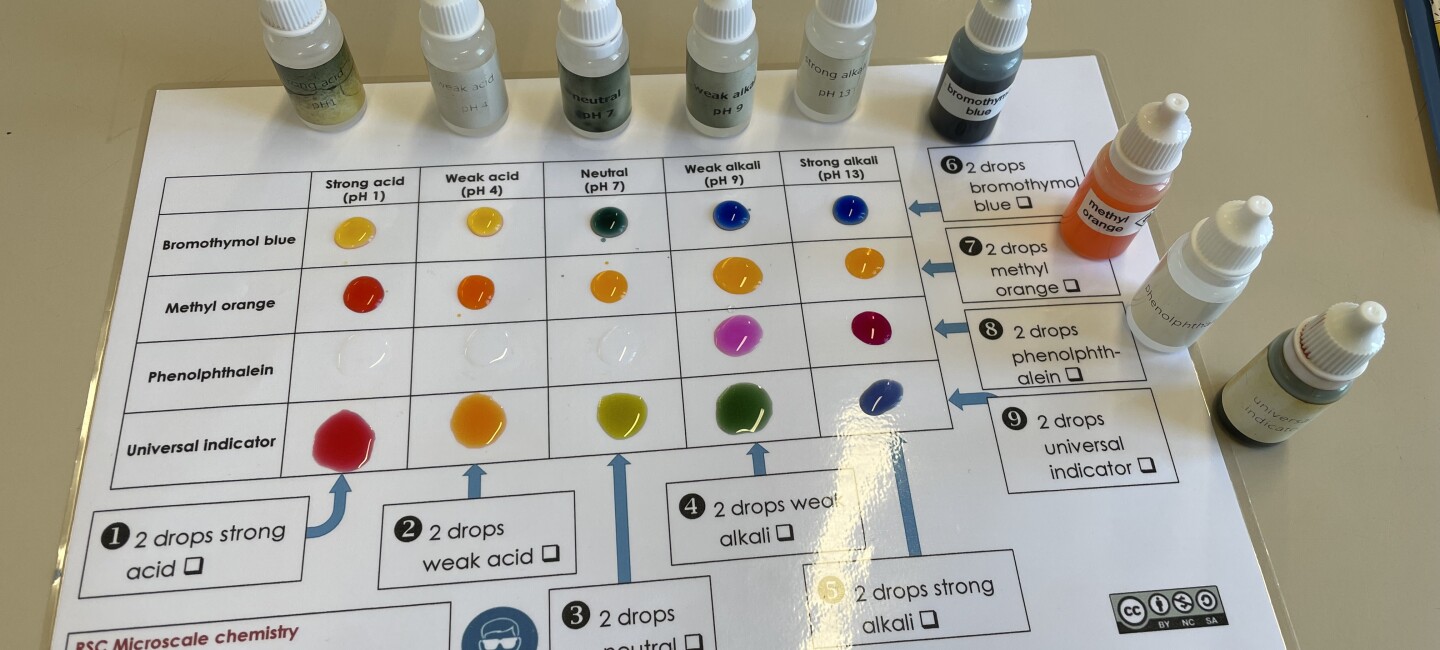
The morning session was led by the Royal Society of Chemistry, who introduced trainees to the world of microscale chemistry.
If you've never come across it before, microscale chemistry is exactly what it sounds like: carrying out experiments using very small amounts of chemicals and equipment. Although everything happens on a much smaller scale, the science is just as powerful.
Trainees got stuck into a range of activities, exploring how microscale practicals can make lessons safer, reduce waste and cut down on preparation time, all while maintaining the excitement and curiosity that practical science can generate.
During the session, the trainees got to take part in the session from the students’ perspective and then were encouraged to think about how these practicals could be adapted for different learners and classroom contexts. There was time to explore what worked well, where misconceptions might arise and how practical activities can be used to genuinely deepen understanding as well as engage learners.
When the Experiment Starts, So Does the Teaching
The afternoon focused on something every science teacher encounters; the reality of managing practical lessons.
We explored the challenges of delivering practicals and how to create an environment where students can take part in a safe responsible and productive manner.
As a group we used discussion explore what effective practical teaching looks like in action. We explored planning and organisation, establishing routines, managing resources and setting clear expectations.
We thought about the small details that can make a big difference: where equipment is placed, how instructions are given, when demonstrations are used and how transitions between activities are managed. These are often the things trainees never notice, but which can transform a practical lesson from chaotic to calm.
The group also considered how to promote productive behaviour during practical work. Practical lessons can be exciting, but is learning taking place? The session gave trainees an opportunity to share experiences from school placements, and to discuss how clear routines, high expectations and consistent teacher presence help keep learners focused on the science rather than the distractions around them.
Developing Confidence for the Classroom
One of the biggest strengths of the day was the way it connected subject knowledge with classroom practice.
By the end of the day, trainees had collected a range of new practical ideas, reflected on their developing teaching practice and shared experiences with their peers. Just as importantly, they had spent time thinking about the decisions that sit behind every successful practical lesson.
As they continue their training journey, these experiences will help them build the confidence to deliver practical science lessons that are engaging, meaningful and memorable for their learners.
A huge thank you to the Royal Society of Chemistry for supporting the day and helping our trainees discover that sometimes the biggest learning can happen on the smallest scale.